Rap is a gimmick, but I’m for the hip-hop, the culture.
- Method Man
Origins: HIP HOP
Back in the early 70’s the Bronx was a hell hole. North of Manhattan, the buildings were burning and gang violence on every block set the tone for every day life on this small corner of the earth. 1520 Sedgwick Avenue, Bronx, New York certainly seemed like an unlikely place to give birth to one of the most successful genres in the history of recorded music.
Jamaican Roots
Disco was the soundtrack of the New York nightclubs and by the mid 70’s it had taken over the airwaves too. Over in the Bronx, a young Clive Campbell, better known as Kool Herc wanted to play music at his own parties, but he wasn’t to keen on Disco.
Born in Kingston, Jamaica, Herc grew up listening to the local DJs at their neighbourhood parties. These gatherings were better known as Dance halls and the Dj’s would talk over the music, which was known as “toasting”.
Clive saw how influential these DJs were and the power their music had over their audience — so much so, that in the 60’s the leading political parties in Kingston would try to associate themselves with these sound systems, to gain popularity and more votes.
One of these pioneering DJ’s Lee “Scratch” Perry was also one of the first innovators to “Dub” original recordings. “Dub” is a technique of recreating reggae tracks layered with effects into new instrumental or even vocal tracks. This technique would later be the inspiration of an entirely new style of music in a different part of the world.
Back to School
In the late 60’s, Herc moved with his father to join the rest of the family in the Bronx. It was a decrepit place, especially with the rise of heroin in the poorer communities and young teen gang violence spreading across all the neighbourhoods. Herc, short for Hercules (for his large build) was more interested in Basketball and Music than beating up junkies and fighting over a turf.
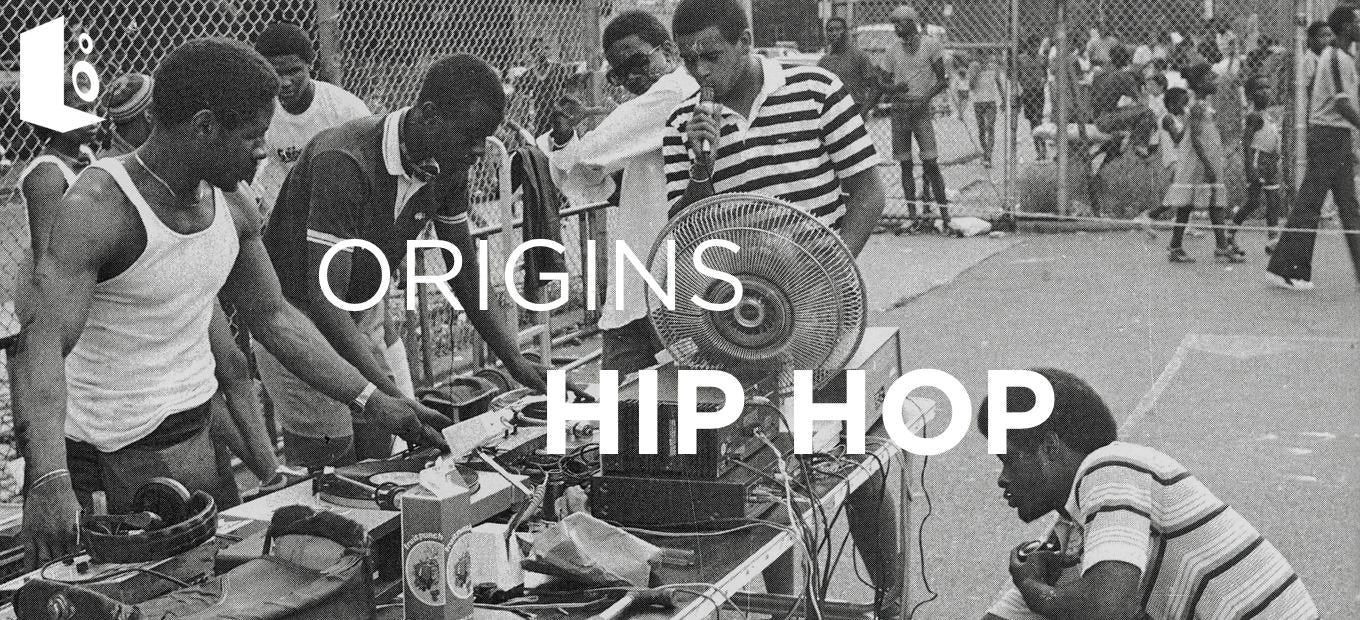
Now the early 70’s, people like the “Ghetto Brothers” were part of a handful of DJ’s throwing block parties to distract people from the harsh realities of life in the Bronx. Herc, like his influencers in Jamaica, wanted his own sound system too. His father worked with PA’s and let him build his own system after Herc had shown him some home-made improvements that made the PA’s more powerful. So, Herc and his sister started hosting back to school parties at the recreation room in their block on Sedgwick Avenue.
Disco was dominating the airwaves, but Herc had something else in mind. He played hard funk records like James Brown and began to strip the tracks down to the beats, similar to the “Dubbing” he had seen back home in Jamaica. But rather than playing the “Dubs” which were actual re-recordings of the originals — Herc would isolate the instrumental break down portion of the funk records, better known as the “break”. Using the same set up as disco DJs — 2 turntables, a mixer and (usually) a microphone, Herc used two copies of the same record so that he could keep playing the “break” with as little interruption as possible. This breakbeat DJ-ing, using hard funk, R&B or Latin percussion formed the basis of his mixing skills.
At the time most Dj’s got on the mic or had someone else on hype duties. Herc had seen his predecessors in Jamaica doing this (Toasting) to great effect and the Disco DJ’s in New York would do the same. So, Herc and his MC (Master of Ceremony) would shout out things like “throw your hands up in the air” or sometimes even just talk to the crowd, when they noticed a scuffle in the back. This would be the very beginning of a new style of rhyming. Herc would call his dancers “break-boys” and “break-girls”, or simply b-boys and b-girls and the MC’s would slowly evolve their rhymes to more than just one or two sentences.
The Rise of Hip Hop Culture
Campbell’s style and popularity didn’t go unnoticed and soon many other DJ’s and sound systems popped up around the boroughs. One such DJ was Africa Bambaataa, a former warlord of the notorious Black Spades.
Bambaataa would soon be known as the “Master of Records”. He incorporated Disco, Latin music and even early Electronic music, like Yellow Magic Orchestra and Kraftwerk into his sets. After an inspiring trip to Africa as a young teen, Bambaataa’s mission was to move gang violence into something positive with the foundation of the “Universal Zulu Nation”. He is credited as one of the founders of Hip Hop culture, involving the 4 elements of music, dance, rhymes and graffiti to empower people and bring them together.
Hip-hop is the streets. Hip-hop is a couple of elements that comes from back in the days… that feel of music with urgency that speaks to you. It speaks to your livelihood and it’s not compromised. It’s blunt. It’s raw, straight off the street — from the beat to the voice to the words. — NAS
He used his influence to ease down the gang violence and turn it into something more productive and expressive.
Check the Technique
In the meantime, behind the scenes, a young Joseph Saddler was eagerly honing his skills. Joseph was a young Bronx resident, obsessed with all things electronics. He made his own set up and sound system and while perfecting his skills to transition between breaks, he found a way to make these crossovers seamless, by using a “backspin technique” — he found a way to quickly find the start of the break, before the other would end, allowing him to play what felt like a continuous loop of that break (also known as Quick Mix Theory). His DJ name was Grandmaster Flash.
*note: Grand Wizard Theodore is often credited with inventing the “Scratch” but Flash was the DJ that brought it to the masses.
The first Hip Hop recording
Most hip hop DJ’s and their MC’s weren’t recording their skills, as the live aspect was part of what made it so special. At that time it was still very much about the DJ and the MC’s were strictly there to get the crowd excited. It was only a matter of time before someone would put more emphasis on the MC and that someone was Sylvia Robinson who founded Sugarhill Records.
In the mid/late 70’s her label was struggling and she saw the potential in these DJ’s playing these breaks and MC’s rhyming over the top. At that point MC’s were getting craftier with their rhymes and started forming more of a structure. Sylvia enlisted 3 boys — Big Mike, Master Gee and Big Bank Hank, who formed the Sugarhill Gang and recorded “Rappers Delight” in 1979, Hip Hop’s 1st commercial success. It was also one of the first recorded songs to use an existing song and “sample” it — which happened to be Chic’s “Good Times”.
“Rappers Delight” was a huge success and a year later Kurtis Blow would follow up with “The Breaks” which spread the sound of this new genre across the country and even other parts of the world. However, it wasn’t till a year later in 1981 that a song out of the most unlikely of places, would propel Hip Hop into a worldwide phenomenon.
Punk meets Hip Hop
At the start of the 80’s Flash and his Furious Five (Mc’s) would already be known as one of the most successful Hip Hop groups, with regular weekly sets in different venues around New York. But, in a very short space of time Flash and the Furious Five would be catapulted to another level.
In the late 70’s Debbie and the rest of the “Blondie” band, were introduced to Hip Hop by Fab 5 Freddy of the infamous graffiti crew “The Fabulous Five”. Freddy was known for his pieces that would cover the entire side of a subway train. He found a way to transition his art from trains to galleries around the world. Freddy met Debbie and Chris in this “art scene” and one night invited them and the rest of the band to go see Flash. Both Debbie and Chris Stein (Guitarist) were fascinated by Flash, the dancers an the Mc’s. As an homage of what they had experienced, they wrote “Rapture”. In 1981 “Rapture” reached #1 across the US and was a hit around the world. Hip Hop was now front and centre and Grandmaster Flash was it’s DJ.
After “Rappers Delight” , “The Breaks” and “Rapture” came the first conscious rap song. In 1982 Sugarhill records released “The Message” with the first lyrical social commentary about life on the streets in the Bronx…for the first time the rest of the world heard about;
“Broken glass everywhere
People pissin’ on the stairs, you know they just don’t care
I can’t take the smell, can’t take the noise
Got no money to move out, I guess I got no choice
Rats in the front room, roaches in the back
Junkies in the alley with the baseball bat
I tried to get away but I couldn’t get far
Cause a man with a tow truck repossessed my car”
Grandmaster Flash actually wanted little to do with the song when he first heard it, so Ed “Duke Bootee” Fletcher, an aspiring producer for Sugarhill Records, wrote most of the lyrics with Melle Mel, one of the Furious 5, who actually raps all the verses.
Hip Hop was still very DJ centric, but with “The Message” the MC became the story teller or even the political poet, speaking for the people in these “Ghettos”. The MC was now a vital part of hip hop and even though Flash had little to do with this song, it further cemented his career as the go to Hip Hop DJ.
The coming of age of the MC
In the early 80’s after the success of “The Message”, a young party promoter by the name of Russell Simmons who was also managing Kurtis Blow, would team up with a young Rick Rubin (from the punk rock scene) to create Def Jam. Def Jam would become a pivotal force in Hip Hop, although one of the biggest acts at that time wasn’t actually signed to Def Jam. Run DMC was managed by Simmons and Rubin produced them. They would break the mould of Hip Hop again and set the game into a new direction.
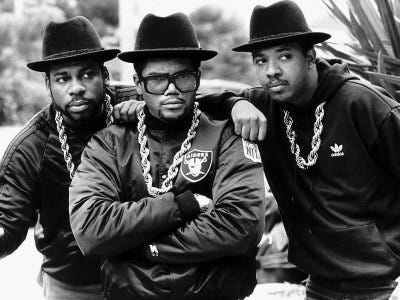
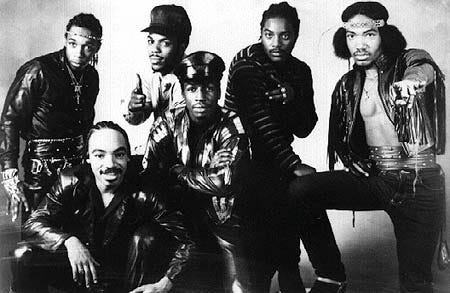
Run DMC’s “Sucker MC’s” was raw and gritty. The group would be the first to step away from the flamboyant dress attire like Melle Mel or the Sugarhill Gang and be more “street” inspired by their DJ Jam Master Jay. “Sucker MC’s” was a song with no melody and no other instrumentation other than a drum beat created from an Oberheim DMX Drum Machine, layered with the raps from MC’s Run and DMC… This was the start of a new wave of Hip Hop.
Run DMC, LL Cool J, Beastie Boys and Public Enemy were part of the 2nd wave of hip hop, but it could be argued they were the first, for the Hip Hop that we understand as a music genre today, most noticeable for its Kick/Snare beats and the remaining constant since “Rappers Delight” — Sampling.
The majority of Hip Hop songs use samples of other records. “Rappers Delight” samples “Chic — Good Times”, “Planet Rock” by Africa Bambaataa and the Soul Sonic Force sample Kraftwerk and Run DMC’s “Walk This Way” is a straight up cover of Aerosmith.
*note: The Incredible Bongo band’s “Apache” is one of the most sampled tracks ever.
MC-ing was initially all about who was better at hyping up the crowd and still complimentary to the DJ, but by the time of “Rappers Delight” and “The Breaks” the DJ started to lose relevance. The MC had taken centre stage and by the mid 80’s the likes of LL Cool J, Rakim, Chuck D, KRS-ONE and many others, would be known as rappers.
Rather than hyping up the crowd a lot of MC’s also turned their attention to each other. The battle between KRS-One and MC Shan as part of the “bridge wars” is considered the first real rap battle. Some say that this type of battle rapping was fuel for an emerging sub genre of Hip Hop — “Gangsta Rap”.
Westcoast rising
Hip Hop was born in New York, but in the late 80’s it had taken over the US and on the other side of the country, a young rap group would quickly become one of the best selling hip hop artists of their time.
Dr. Dre, Eazy E, Ice Cube, Mc Ren, DJ Yella and Arabian Prince formed N.W.A. (Niggaz Wit Attitudes). Even though “Ice T” to many, is considered the first Gangsta’ Rapper with tracks like “6 in the Mornin”, NWA brought it to the mainstream. Ice Cube was inspired by ‘The Message” and was adamant to keep his own lyrics raw and unfiltered. N.W.A found unprecedented success, but the increasing friction between the group would cause them to disband. They all went their separate ways with Dr. Dre and Ice Cube having the most notable success post N.W.A.
After leaving N.W.A, Dr. Dre decided to go solo. In the early 90’s Dre produced his first solo album. “The Chronic” set the tone for the “G-Funk” era and a whole new type of Hip Hop sound. Rather than focus on political and controversial lyrics like N.W.A, Dre focused on the feel good factor that hip hop started out with. He was one of the first to create a style of Hip Hop that was laid back and wasn’t just about the samples like many of his predecessors but rather made more use of melodies, hooks and verses and the famous keyboard sounds associated to the “G-Funk” sound.
The Big Time
Over the years Hip Hop has turned into one of the most commercially successful genres ever and it has no signs of slowing down. The 90’s are considered the golden age of Hip Hop for reaching the peak of its success and spawning the biggest names we know today. Artists like Eminem are among the best selling artists in history. As a genre Hip Hop is most recognisable for its heavy use of samples from other styles such as Funk, R&B, Soul, Jazz, Rock, Techno and even Classical and for its unmistakable fat drum beat “Boom Bap, Boom Boom Boom Bap”
One track that sums it all up for me is;
It has the story telling element, an incredible lyrical flow, a funk sample and a fat drum — what’s not to love!
Naturally, every genre evolves and today a new generation of beat makers and MC’s are leading the way. Whether you like the new or the old, what is certain is that Hip Hop has endured and cemented itself as one of the most successful genres in the world.
Here’s a Spotify Playlist with the songs covered in this blog and others that were instrumental to the evolution of Hip Hop. https://open.spotify.com/user/murumusic/playlist/1V9giG2ho2hpVLpmS1z7ly
- Note: I’m the founder of Muru Music, a music technology start-up that has created the first A.I. DJ brain www.murumusic.com. I spent a career studying musicology and have been obsessed with genres. While many dismiss musical genres, I think they are crucial to understanding the past, present and future of music.